
Spirit of Innovation Awards
TRENDS

A surprising non-dairy, sparkling seltzer kefir delivers refreshing probiotic power.
Non-Fizzy Logic
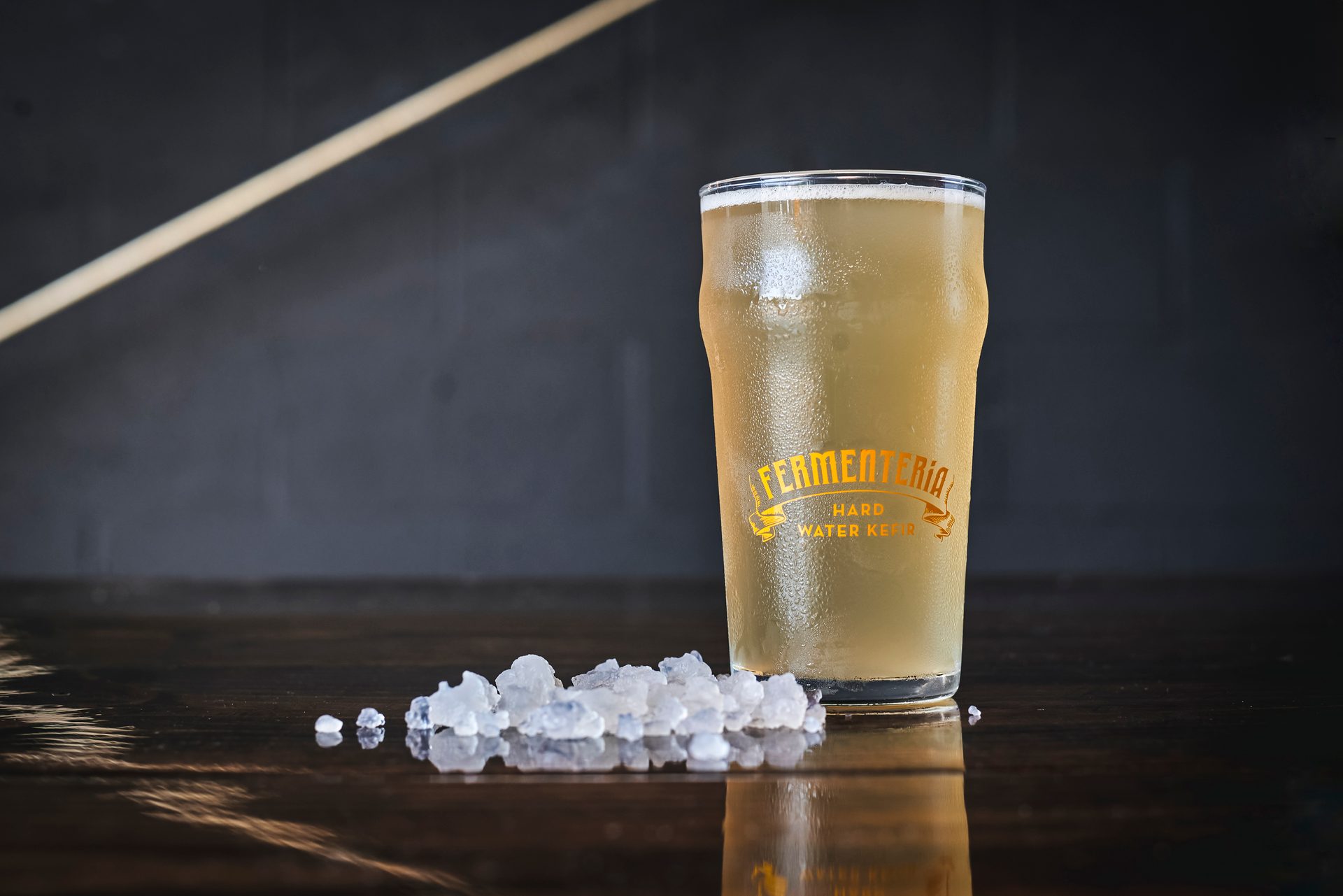
Flavor meets immunity in an innovative take on kefir—and kefir with a kick. Credit: Fermenteria
CATEGORY: RETAIL BEVERAGE
WINNER
By Erin Costello
By David Feder
All it took was a single sip. Jade Chang, founder and co-owner with Julie Wood of San Antonio’s “Fermenteria” was living in Nicaragua and stumbled across a beverage that was “bright, bubbly, and packed with probiotics.” She relates that the drink was “nothing like she expected from a fermented drink” and “tasted more like sparkling water with benefits.” One sip, she says, and she was hooked.
When she returned to the States, that refreshing experience still in mind, she and Wood were inspired to not only recreate the experience but share it with the rest of America—with a twist. “We realized that people are looking for two things in the market right now—a more balanced way to indulge in alcohol, or…an interesting beverage that is alcohol free,” explains Wood. So, recognizing that the closest similar beverages on the US market were vinegary kombuchas that compromised either on flavor or health, the duo set about to do both a water kefir and a hard kefir designed to “embrace the art of the buzz.”
Bringing in two more team members, Chang and Wood doubled up on developing their beverages while building their unique brewery in San Antonio from scratch. “We tapped in some of the brightest minds we could find with consultants to help us with the scalability and science, eventually opening our own in-house lab,” Wood elaborates. “This has been a scrappy, passion-built project from Day One, with a commitment to bring our product to our community, our state, and eventually coast to coast all while keeping our core values at heart.”
Wood and Chang’s Fermenteria project was by no means easy. “As the first dedicated brewery of our kind in the US, our biggest hurdle out of the gate was that there was no playbook,” Wood admits. “We knew how to countertop ferment, but everything else had to be experimented with and formulated from the ground up. Facing all the issues of balancing production, contractors, our day jobs, and more we kept improving on our process and our brews,” she continues.”
The process took two years, starting in 2023 “in a bucket in the breakroom kitchen.” They consulted with experts in Nicaragua via Zoom, culturing the kefir grains—the combination of yeast and probiotic cultures that work symbiotically to trigger fermentation. The team discovered that traditional brewery systems did not suit their product goals, each type creating a microbe imbalance of some kind or another. For example, the open top systems used to make kombucha delivered strong vinegar notes, and treating yeast negatively impacted the bacteria and vice-versa.
“It was a delicate balance where we felt like the pendulum was in constant motion, as we moved forward,” Wood explains. Creating an in-house lab allowed the R&D team to isolate parts of the culture, to grow and observe each individually, and fine-tune the system into a replicable, good-tasting beverage with “the best active cell counts on the market for a beverage of its kind.”
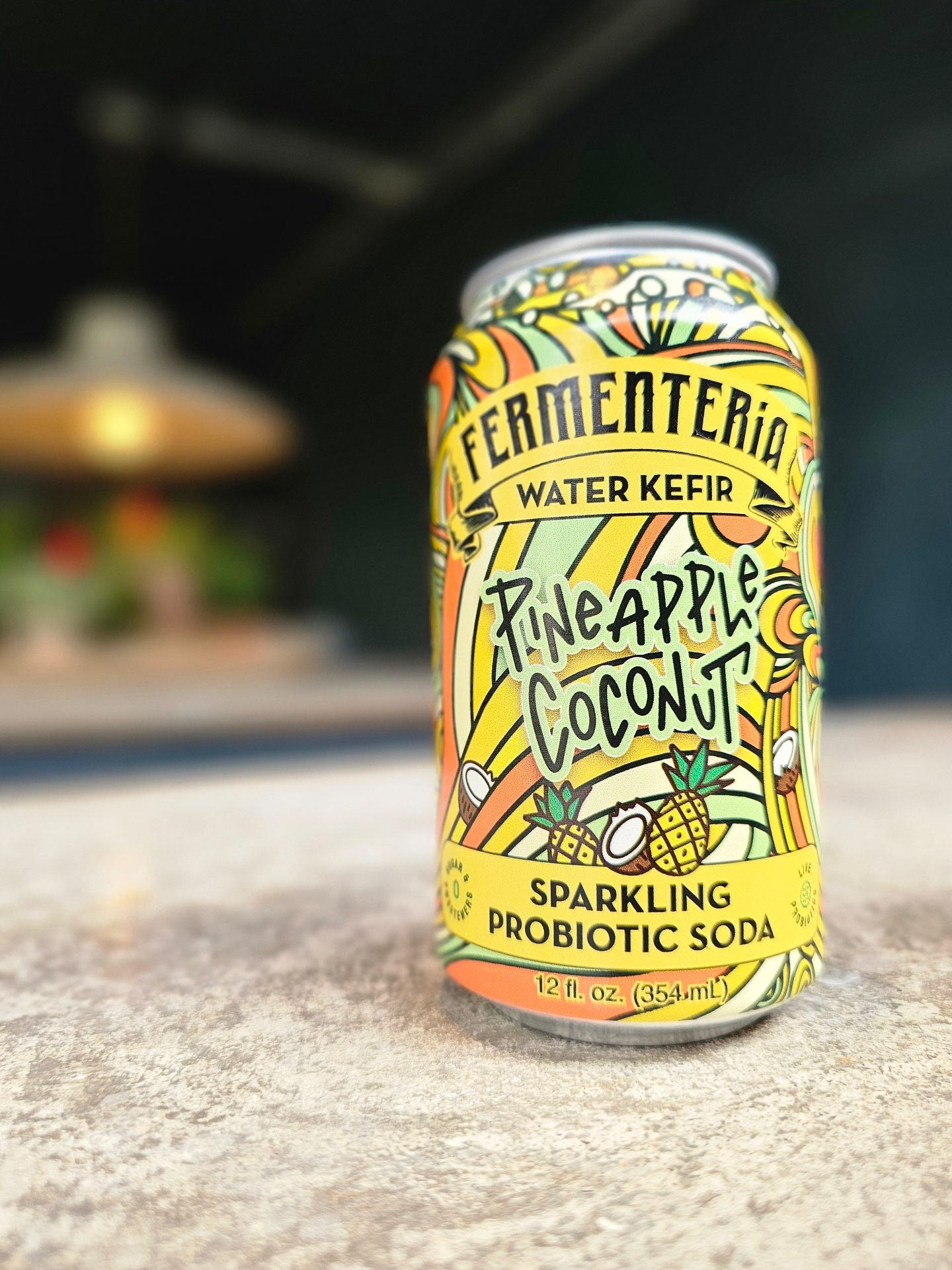
Those results became winning water-based, probiotic kefirs in both alcohol and alcohol-free options. They are offered in four dry, fruit-forward flavors with no added sugar and 10-12 billion active CFUs. The non-alcohol Strawberry-Lime and Pineapple-Coconut, and the 5% ABV Hibiscus Sangria and Thai Lime Coconut. Each is only 100 kcals/12oz can.
Background image credit: desifoto / Getty Images
next article